

Heel Slides in Bed After Knee Replacement: The First 2 Weeks After Surgery
 Dr. Joe Armeli, DPT
Heel slides in bed are the first real exercise most patients do after a total knee replacement — and getting them right in the first two weeks sets the tone for everything that follows. Here's how to do them well, and how to stop fighting your own bedsheets.
Rehab guidance from UCSF's Department of Orthopaedic Surgery notes that starting rehab in under 24 hours after surgery, instead of waiting the traditional 48 to 72 hours, leads to shorter hospital stays and better flexion outcomes. If you're one to two weeks out from a total knee replacement (TKR), that's exactly why your surgical team had you moving your leg before you even left the hospital bed.
Key Takeaways
| Question | Quick Answer |
|---|---|
| Why do heel slides start in bed? | Getting to the floor isn't realistic in the first two weeks. Bed-based heel slides let you safely start bending a swollen, guarded knee without the fall risk of getting up and down. |
| How often should I do them? | Most surgical protocols call for heel slides several times a day, every day, for the first two weeks. See the 12-week knee replacement recovery checklist for the full week-by-week breakdown. |
| Why does the mattress make it harder? | Sheets and mattress fabric grip your heel instead of letting it glide, so you're fighting friction on top of fighting a stiff, swollen joint. |
| What fixes the friction problem? | A smooth, low-friction surface under the leg. The Heel Slide Board is built specifically for this. |
| When can I move to floor-based heel slides? | A firm couch works from around weeks 2 to 3. The floor itself is optional, and for most people it takes about two months before getting down and back up feels safe and comfortable — and before your PT or surgeon clears you for floor transfers. |
Just had surgery and not sure what comes next?
Get my free 12-week recovery checklist as a printable PDF. Written by a PT, one email, no spam.
✓ Check your inbox. The checklist is on its way.
Total Knee Replacement Recovery: Why Heel Slides Start in Bed
Here's the reality nobody explains well at discharge. Your total knee replacement recovery just began, and your surgeon wants motion started almost immediately.
But you're not walking laps yet. Getting down to a mat on the floor, then back up again, isn't realistic for most people in week one.
That's why heel slides in bed after knee replacement are the default starting exercise. You're already lying down, your leg is supported, and there's no transfer risk involved.
The goal in these first two weeks isn't a dramatic bend. It's consistent, small wins that keep the joint from stiffening while swelling and pain are at their worst.
How to Do Heel Slides in Bed After Knee Replacement

Lie flat on your back with both legs straight out in front of you. Slowly bend the surgical knee by sliding your heel toward your butt, keeping the heel in contact with the mattress the entire time.
Go until you feel a stretch, not sharp pain. Hold for 3 to 5 seconds, then slide it back down to straight.
That's one rep. Most protocols call for 3 sets of 10, two to four times a day, which lines up with the early bed-based phase covered in our 12-week knee replacement recovery checklist.
One more bed rule while we're here: between sessions, don't park a pillow under your operative knee. It feels great and it quietly costs you your straight leg, because a knee that rests bent all day starts to stay bent. Support the ankle instead and let the knee hang flat.
Why Bedsheets and Mattress Friction Fight You
This is the part almost nobody warns you about. Bedsheets fight you the whole way.
Cotton sheets grip skin and socks. A quilted mattress topper grips even harder.
You end up using extra quad and hip effort just to drag your heel three inches, on top of the effort your surgical leg is already struggling to produce.
That extra friction doesn't build strength. It just adds frustration, and frustration is what makes people quit reps early or skip sessions entirely.
The problem is so universal that hospital exercise handouts literally tell patients to improvise a fix:
From a real hospital exercise handout
"SPECIAL INSTRUCTIONS: Use a pillow case under sliding foot to reduce friction."
Heel slide instructions, total knee replacement patient protocol
That's the improvised version of the fix. A purpose-built surface just does it better.
Soft floor pads collapse under your leg's weight for the same reason generic foam rollers fail at extension stretches. Anything that isn't a firm, smooth surface works against you, not with you.

Same idea as the pillowcase trick
A smooth surface for your heel, right on the mattress.
The Heel Slide Board lies flat on the bed under your leg. The low-friction top lets your heel glide instead of snag, and the non-slip back helps keep the board in place on the sheets. Start in bed your first days home, then move it to the couch as you progress.
Free shipping · 30-day money-back guarantee
Progress you can measure is progress you'll keep showing up for.
Did You Know?
Surgeons generally want patients to reach at least 90 degrees of knee flexion by the two-week mark after total knee replacement.
How Often to Do Heel Slides in the First 2 Weeks After Surgery
Frequency matters more than intensity right now. Most surgical teams prescribe heel slide sessions two to four times daily during weeks 1 and 2, alongside quad sets and ankle pumps.
There's no set number of physical therapy visits — how much supervised therapy you get is based on medical necessity — and whatever your schedule looks like, most of the work happens between appointments. That's the part of post-surgery rehab that determines how the first month actually goes.
Don't chase a big number of degrees on day 3. Chase consistency.
Flexion gains are fastest in the first six weeks and start to slow after about three months, though small gains are still possible out to a year. Extension is the one that's hardest to win back if it slides early, which is why getting the knee fully straight is the priority of these first weeks.


Recovering from a knee replacement right now?
Get my 12-week recovery checklist as a free printable PDF. One email. Stick it on the fridge and check off your milestones.
✓ Check your inbox. The checklist is on its way.
The Rest of Your In-Bed Routine: Quad Sets, Ankle Pumps, and Heel Props
Heel slides don't work alone in bed, and bending is only half the range-of-motion job. Your knee also has to get fully straight. These three cover the rest of the routine, and none of them require getting up.

Quad Sets
Press the back of your knee down into the mattress and tighten the muscle on top of your thigh. Hold 5 to 10 seconds, then relax.
Fire the quad first, then slide the heel. A quad that hasn't reactivated after surgery won't control the knee well during the slide, which is part of why some patients feel shaky the first few days.

Ankle Pumps
Point your toes away from you, then pull them back toward your shins, and keep alternating.
This keeps blood moving while you're less mobile, and that's not busywork. It's one of the main ways your care team lowers your risk of blood clots in the first weeks.

Heel Props
The mirror image of a heel slide. Prop your heel on a rolled towel or firm support with nothing under the knee, and let the knee settle toward straight — start with 3–5 minutes and build to 10–15 minutes as tolerated.
Straightening the knee fully, what we call terminal extension, matters just as much as bending it and is easier to neglect. Heel slides earn your bend. Heel props earn your straight leg. You need both.
The heel prop matters enough that I built a tool for it. The KneEXT foam roller has a heel cut-out that lets your calf rest in a cup while the knee hangs unsupported, which is the exact position needed for a real extension stretch.

Physical Therapy at Home: Building Your In-Bed Toolkit
I built this kit because every TKR patient I treated got sent home with a printed exercise sheet and zero equipment. The board handles your bend and the KneEXT handles your straight leg. One more tool rounds out the first weeks.
Once you have a few degrees of bend, a non-elastic stretch strap hooked around the foot gives you extra pull without needing to reach your foot with your hands, which is nearly impossible right after surgery when bending forward is limited. This is how physical therapy at home actually works in the first two weeks. Not fancy equipment, just the right tool for the specific mechanical problem in front of you.

If you want all three pieces at once, the Total Knee Rehab Kit ($94.99) bundles the Heel Slide Board, the KneEXT roller, and the stretch strap together. It covers flexion, extension, and quad activation, which is essentially everything your PT prescribes in the first phase.
When and How to Progress Out of Bed
Most people move heel slides from the mattress to a firmer surface somewhere between the end of week 2 and week 3, and "firmer" doesn't have to mean the floor. A firm couch works, and plenty of people do the whole first month on a firm bed or couch with the board. The floor is optional, and it usually comes much later: for most people it takes about two months before getting down to the floor and back up feels safe and comfortable. The signal isn't a calendar date. It's whether you can get down and back up without help, and whether your surgeon or PT has cleared it.

Once you're there, the exercise itself doesn't change much. It's still a heel gliding toward the hip with control.
What changes is the surface, the position (seated, wall-supported, or on a mat), and eventually the resistance you add. When you're ready for that next layer, the six knee flexion exercises I use in clinic pick up exactly where in-bed heel slides leave off.
Did You Know?
Knee flexion gains usually slow down around 3 months after surgery, which is why the work you put in during the early weeks matters so much.
For the full range of heel slide variations, seated versions, wall versions, towel-assisted versions, and strap-assisted versions, once you're ready to move past the in-bed stage, our heel slides guide is the right next step for full technique details and variations.
Frequently Asked Questions
How many heel slides should I do per day after knee replacement?
Most protocols call for 3 sets of 10 heel slides, two to four times a day, during the first two weeks after surgery. Consistency across the day matters more than doing a huge number in one session.
Can I do heel slides on a regular bed without any equipment?
Yes, but bedsheets create friction that makes the exercise harder and more painful than it needs to be. A smooth surface like the Heel Slide Board reduces the drag so you can focus effort on bending the knee, not dragging fabric.
Why does my heel get stuck when I slide it on the mattress?
Cotton sheets and quilted mattress toppers grip skin, socks, and fabric, causing the heel to snag mid-slide. This is exactly where a smooth surface matters most, since a stuck heel turns a slow, smooth rep into a stop-start one.
When can I stop doing heel slides in bed and move to the floor?
Most patients move to a firmer surface, like a firm couch, somewhere between weeks 2 and 3. The floor itself is optional and usually comes much later: for most people it takes about two months before getting down and back up feels safe and comfortable, and your surgical team should clear it first. There's no universal date, it depends on your individual recovery pace.
Is a heel slide board worth it for total knee replacement recovery?
For most patients doing daily bed-based exercises, yes. A low-friction surface removes one of the biggest daily frustrations in early total knee replacement recovery, and at $39.99 it's a small cost relative to the physical therapy at home routine you'll repeat dozens of times over the first month.
Do heel slides help with knee replacement exercises beyond just bending the knee?
Heel slides primarily target flexion (bending), so they should be paired with quad sets and extension work like the KneEXT roller to cover the full range needed for daily activities. A complete early routine addresses both directions, not just bending.
Are heel slides used for surgeries other than knee replacement?
Yes. The same sliding motion and low-friction principle apply to hip replacement recovery and rotator cuff repair recovery, just on different joints and sometimes different surfaces like a table instead of a bed.
Win the First Two Weeks in Bed
Heel slides in bed aren't glamorous, but they're the foundation everything else in your recovery gets built on. Fight for every degree now — the reps you put in during weeks 1 and 2 set up the weeks that follow.
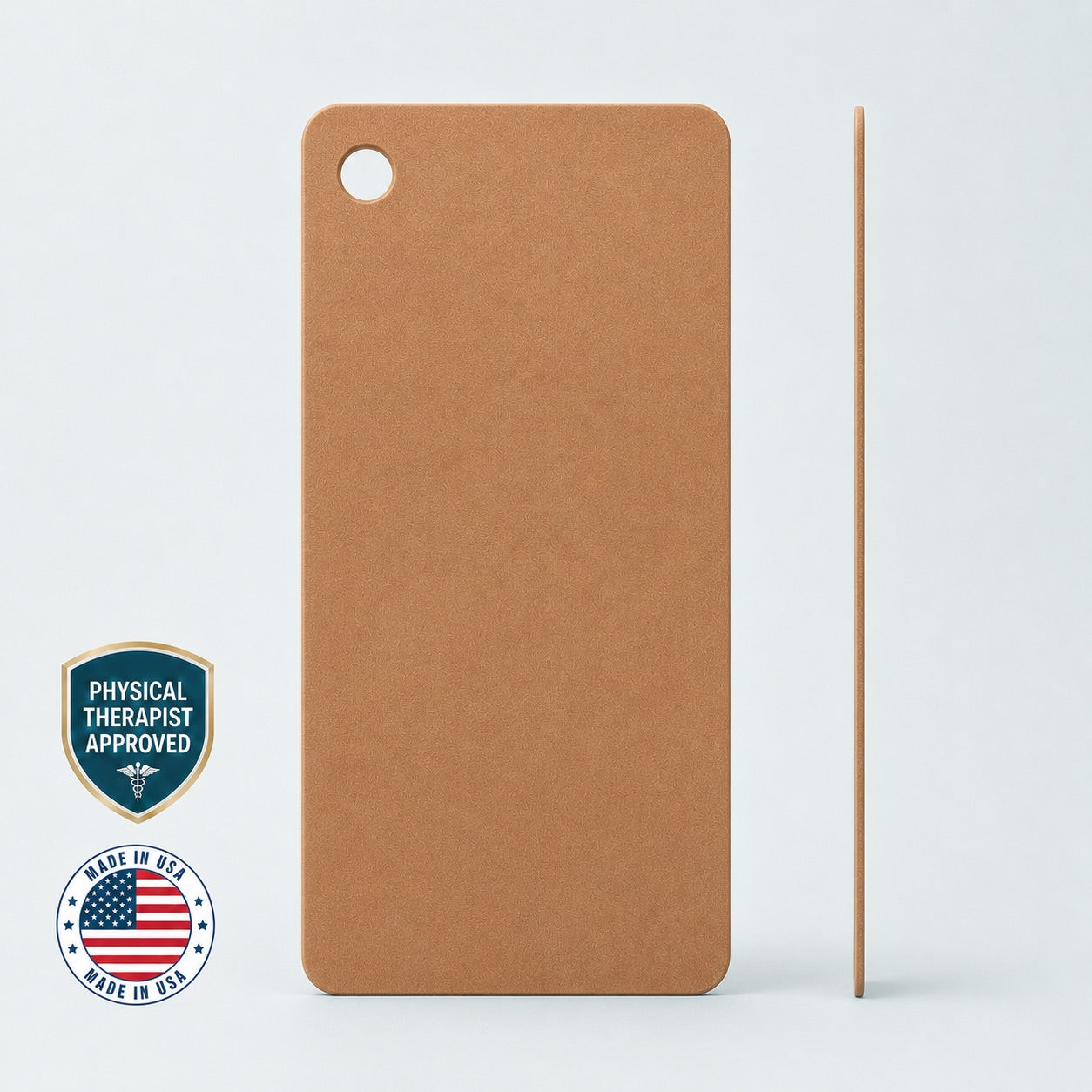
The EquipCore Heel Slide Board turns your mattress into a surface your heel can actually glide on, from day one.
Shop the Heel Slide Board →PT-Designed | Free Shipping | 30-Day Returns
Want the full setup? The Total Knee Rehab Kit bundles the board with the KneEXT and stretch strap →
Disclaimer: This guide is for educational purposes and does not replace the advice of your surgeon or physical therapist. Always consult with your medical team before beginning new exercises.
Tell me what you're recovering from and where you're at — I'll point you to the right tool, or tell you honestly if you don't need one yet. Every message comes straight to me, and I read every one personally.