Joe Armeli, DPT
Designed by Joe Armeli, DPT 10+ yrs outpatient orthopedic PT

Heel Slide Board — PT-Approved for Knee, Hip & Rotator Cuff Recovery

Skip to product information
1 of 10

Heel Slide Board — PT-Approved for Knee, Hip & Rotator Cuff Recovery

Heel Slide Board — PT-Approved for Knee, Hip & Rotator Cuff Recovery

PT-Approved Recovery Equipment

PT-approved heel slide board for smoother knee, hip, and rotator cuff range-of-motion exercises at home.

Frictionless MDF surface — smoother heel slides than bedsheets or carpet, with less pain per rep.
Light + portable — 2.5 lb with a built-in carry handle for one-handed setup on bed, couch, or therapy table.
Triple-condition rehab — designed for total knee replacement, total hip replacement, and rotator cuff repair.
Quantity
30-day return guarantee
Free U.S. shipping over $50
PT-Approved

How to Use

  1. Place the Heel Slide Board on a stable surface — a bed, couch, or therapy table works.
  2. Sit or lie down so your operated leg is extended along the board with your heel resting on its surface.
  3. Slowly bend your knee, sliding your heel toward your body until you feel a strong but tolerable stretch.
  4. Hold for 5 seconds at the deepest point you can comfortably reach.
  5. Slide your heel back out to the starting position with control.
  6. Complete 2–3 sets of 10 reps, 3 times per day. Stop if pain spikes above 6/10.

Specs & Safety

Specs

  • Weight: 2.5 lb
  • Dimensions: 28" × 15"
  • Material: 3/16" MDF (medium-density fiberboard) with low-friction finish
  • Load rating: 50 lb max
  • Built-in carry handle

Safety

  • Place the board on a flat, stable surface before each use. Do not use on uneven or unstable bedding.
  • Stop the exercise if pain spikes above 6/10 or if you feel a sharp pull at the surgical site.
  • Follow your surgeon's and physical therapist's range-of-motion restrictions, especially after total hip replacement.
  • For rotator cuff use: stay within your prescribed active-assisted range of motion (AAROM) range — do not push past it.
  • Discontinue use if the board shows visible cracks or warping.
View full details
28 × 15 in
Working surface fits a bed, couch, or therapy table
2.5 lb
Lightweight enough for one-handed setup
#1
Prescribed exercise for regaining knee flexion after TKR

Why Physical Therapists Use This Board

Recovery comes down to two things: getting your range of motion back — and doing the reps often enough to keep it.

Range of Motion

Restore your bend, faster

A joint that won't move freely stiffens and gets harder to fix the longer it stays tight. Heel slides are the #1 prescribed exercise for restoring motion — and a frictionless surface lets you slide deeper with less pain, so you reach your range goals sooner.

Heel Slides

Consistency

Make the reps doable

Recovery is about repetition, and people skip reps that hurt. A smooth, snag-free glide makes each rep easier and less painful than dragging your heel across bedsheets or carpet — so you actually hit your daily sets.

Less pain per rep

Exercises This Tool Powers

Weeks 1–6 post-op

Heel Slides (TKR)

Lie or sit with your operated leg extended on the board. Slowly bend your knee, sliding your heel toward your body until you feel a strong stretch. Hold 5 seconds, then slide back out.

2–3 Sets
10 Reps
5 sec Hold
3×/day Frequency

Weeks 1–6 post-op

Hip Abduction Slides (THR)

Lie on your back with the board under your operated leg. Slide your foot sideways away from your body to work hip abduction, (within hip precautions).

2 Sets
10 each way Reps
2×/day Frequency

Weeks 4–6 post-op (per surgeon clearance)

Table Slides (Rotator Cuff)

Sit at a table with the board in front of you and a small towel under your hand. Slide your hand forward to work shoulder flexion, then sideways to work abduction. Move only as far as your surgeon's AAROM range allows.

2 Sets
10 each way Reps
Per surgeon Range
2×/day Frequency
About EquipCore

About EquipCore

EquipCore is owned and operated by licensed physical therapists who have spent more than a decade helping post-surgical patients regain pain-free movement.

After guiding thousands of total knee, hip, and shoulder recoveries in outpatient clinics, we hand-selected every tool in our store to match the evidence-based protocols we use daily in practice.

Each item is tested with real patients for safety, comfort, and results — so you can rehab at home with professional-grade confidence.

Frequently Asked Questions

Do I really need a heel slide board after a knee replacement?

Heel slides are the most commonly prescribed exercise for regaining knee flexion after a total knee replacement. You can do them on a bed, but sheets bunch and carpet grabs, making reps choppy and painful. A low-friction board makes each slide smoother so you can reach a deeper bend and stay consistent.

How is this better than just sliding my heel on the bed?

Bedsheets and carpet create friction and snag, which causes pain and stop-start reps. The board's frictionless MDF surface lets your heel glide continuously, so you reach end-range more comfortably and your reps are smoother and more effective.

Can I use this after a hip replacement?

Yes. The board works equally well for hip flexion and hip abduction slides during your THR rehab. Lie on your back with the board under your operated leg and slide your foot toward your body (flexion) or outward within your hip precautions (abduction). Stay within your surgeon's prescribed range of motion.

Does this work for rotator cuff recovery?

Yes — it doubles as a table slide board during your active-assisted range of motion (AAROM) phase after rotator cuff repair. Place it on a table with a towel under your hand, then slide your hand forward and sideways within your surgeon's cleared AAROM range. Most patients begin around 4 weeks post-op per surgeon clearance.

When can I start using it after surgery?

Many patients begin gentle heel slides within the first week, but follow your surgeon's and physical therapist's specific timeline. Start gently and stop if pain exceeds about 6 out of 10 or you feel a sharp pull at the surgical site.

How many reps should I do?

A common starting point is 2 to 3 sets of 10 reps, 2 to 3 times per day, holding about 5 seconds at your deepest comfortable bend. Your physical therapist may adjust this, and their plan always takes priority.

Will it work on my bed, or do I need a table?

It works on a bed, couch, or therapy table for knee and hip slides; for rotator-cuff work, place it on a table with a towel under your hand. At 2.5 lb with a 50 lb load rating and a built-in carry handle, it's sturdy and easy to set up one-handed.

Our promise to you

Recover with confidence

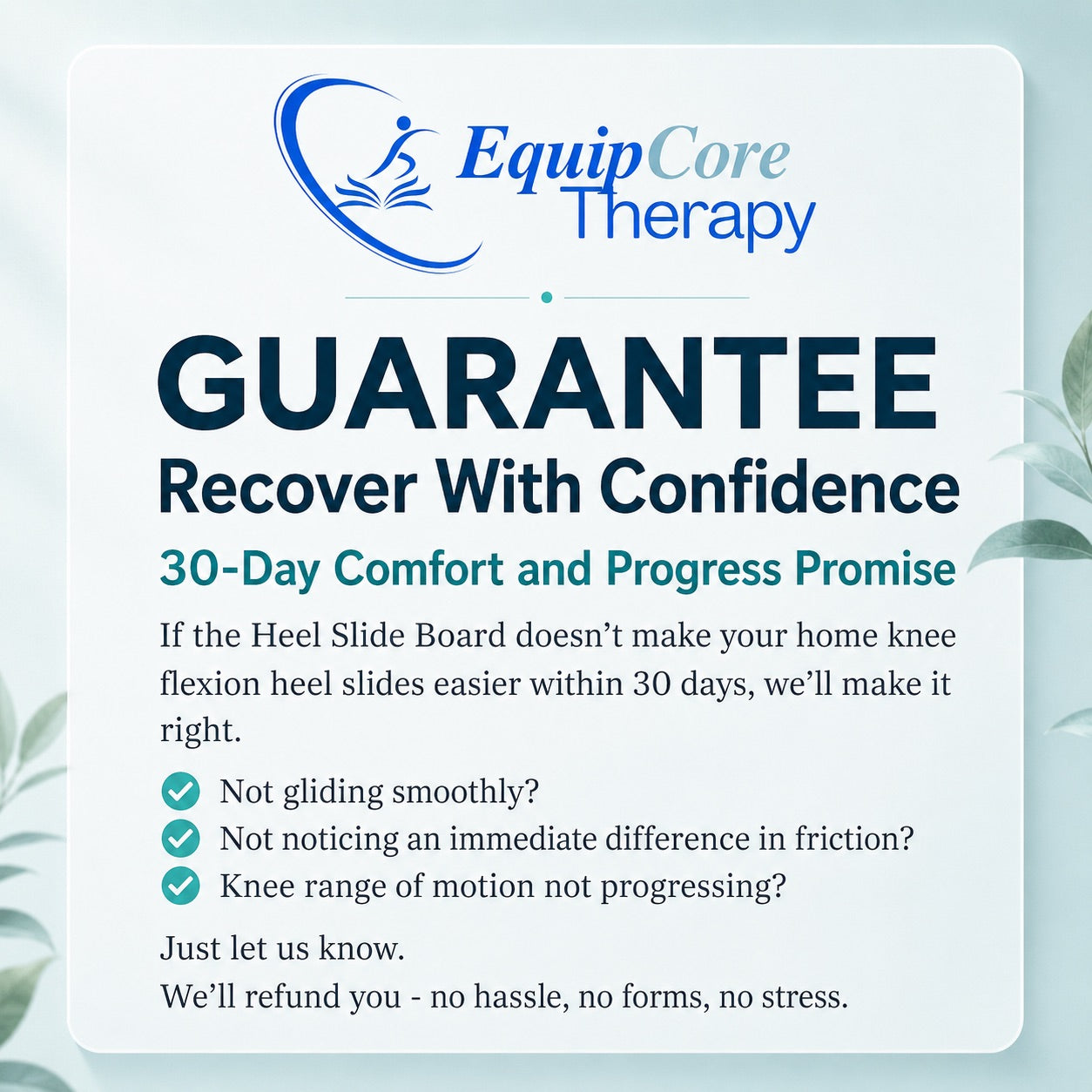
Try the Heel Slide Board for a full 30 days. If it doesn't make your heel slides smoother and your range-of-motion work easier, send it back for a full refund — no questions, no restocking fee.

  • 30-day money-back guarantee
  • Free shipping over $50
  • Designed & tested by a licensed PT

Backed personally by Joe Armeli, DPT — 10+ years of outpatient orthopedic recovery.